2026 Chrome Compression Angle Stop Valve Guide
Close to 30% of residential plumbing callouts originate from a shutoff valve failure. This highlights the importance of the right water control valve. It’s as critical as the fixture it serves.
In this guide, you’ll get a practical look at the angle valve 1/2. It explains what the valve is, how it functions in modern plumbing, and what benefits proper installation offers. Homeowners and professionals will find useful advice for various applications, from lavatory shutoffs to dishwasher and washing machine hookups.
We draw on trade references and product examples, including chrome-plated brass valves with integrated seals. This helps explain compatibility with common stub-outs and supply lines. Whether you’re tackling a DIY repair or buying parts from distributors like Installation Parts Supply, understanding the compression angle stop is key. It ensures you choose the best water control valve for your project.
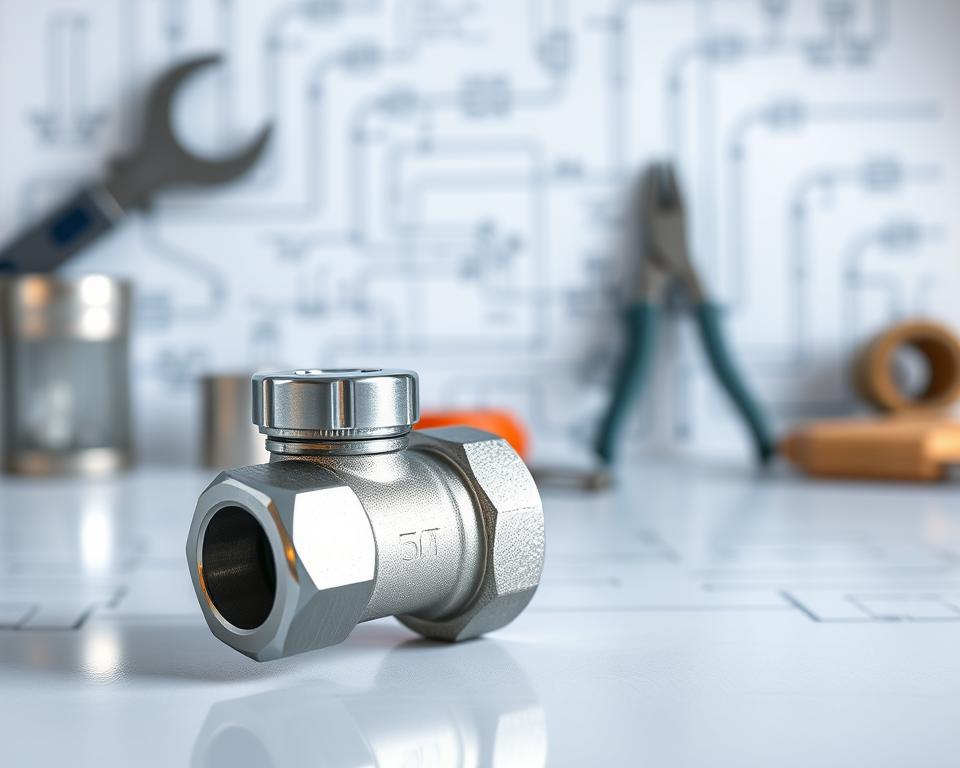
Understanding Angle Stop Valves and Compression Fittings
Angle stops are compact shutoff devices that change flow direction 90 degrees between a supply stub-out and the fixture supply line. A typical 1/2 angle stop valve sits under sinks and behind toilets. It gives a local water control valve without shutting off the whole house. Homeowners and pros use these valves for routine maintenance, fixture swaps, and quick isolation during diy plumbing repair.
What An Angle Stop Does:
- Offers a local shutoff point at lavatories, sinks, toilets, dishwashers, and washing machines.
- Fits into tight spaces where a straight valve would not be practical.
- Available in common sizes such as angle valve 1/2 or smaller 1/4 options.
How Compression Fittings Create A Seal
Compression-style valves rely on a nut and ferrule compressing onto copper, brass, or PEX (with an insert) to form a mechanical seal. Because a compression fitting angle valve installs without soldering, it speeds up installs and makes future replacement easier. By tightening the nut, installers seat the ferrule against the stub-out, allowing it to grip and seal the tubing.
Reasons pros and DIYers pick compression
- With no open flame or hot work needed, compression fittings are well suited for retrofits and tight access locations.
- Valves like the 1/2″ angle stop can be swapped without cutting back the supply if the ferrule and nut are in good condition.
- Compression performs well on copper and PEX when used with the correct inserts or ferrules.
Compression Versus Sweat And Threaded Connections
Compression avoids soldering and is faster for many field repairs. Sweat connections give a permanent joint that some plumbers prefer for long-term installs. Threaded setups, such as threading an angle stop into an FIP drop-ear 90, offer serviceability but require careful alignment and sealing. Discussion among pros often centers on whether to use buried threaded nipples or sweat adapters, as well as how exposed copper looks beneath sinks.
| Type Of Connection | Advantages | Cons |
|---|---|---|
| Compression (1/2 angle stop valve) | Fast installation, no soldering, easy valve replacement, works with copper and PEX | Ferrule can require replacement after multiple disassemblies; some consider it less permanent than a sweat connection |
| Sweat (soldered) | Very durable, permanent joint, often preferred for long-term projects | Requires soldering/hot work and can create longer installation times |
| Threaded into FIP drop-ear 90 | Serviceable mechanical connection, secure joint, suitable for repeated maintenance | Requires proper sealing, risks with buried nipples, can be bulky in tight spaces |
Chrome Compression Angle Stop Valve Overview
A chrome compression angle stop valve combines polished style with practical function for visible plumbing fixtures. With chrome-plated brass construction, it’s engineered to suit the needs of both buyers and installers. That makes it a popular option for visible supply shutoffs and quick repair work.
How Chrome-Plated Brass Construction And Finishes Work
Premium angle stops use machined brass bodies topped with a chrome-plated finish. This finish complements typical bathroom hardware and offers a polished appearance that resists tarnishing. Brass is chosen for its solid base metal, ensuring it’s safe for potable water use.
Brands such as Schell and Moen supply chrome-plated brass options. They also produce versions that incorporate integrated seals. Product listings typically detail finish, dimensions, and whether the valve includes a serviceable packing or a factory-fit compression nut.
Performance Highlights: Corrosion Resistance And Durability
Brass is valued for its corrosion resistance and for resisting dezincification in common domestic water environments. A chrome finish provides an additional layer of protection. It helps the valve match faucets and other bathroom hardware visually.
With integrated seals, extra sealant is not usually required during installation. Good internal design and serviceable packing contribute to long operating life. These features support reliable shutoff across many operating cycles.
Where chrome angle stops are typically installed in bathrooms and kitchens
Chrome compression angle stop valves work well under lavatories, behind toilets, and below kitchen sinks. The 90-degree turn and compact form make them ideal where space is limited. They’re also great for right-angle connections.
Installers commonly choose a 1/2 compression angle stop or a 1/2 x 1/4 configuration, based on the fixture inlet size. Product pages often show chrome finish photos, information about integrated seals, and price points. That detail helps buyers understand what to expect in bathroom hardware and plumbing fixtures.
Angle Valve Sizes And Connection Types
When selecting an angle valve, understanding size labels is critical. Inlet and outlet sizes are given by manufacturers as nominal pairs, for example 1/2 x 1/4 angle stop or 1/2 x 1/2 angle stop valve. These labels indicate how the valve will fit different fixtures and supply lines.
The term 1/2 angle stop typically denotes a 1/2″ inlet, designed to connect to wall stub-outs. This size can accommodate a smaller outlet, like a 1/4 angle stop, for precise fixture connections. You’ll often use a 1/4 angle stop for smaller flex hoses or appliance inlets.
In some cases, a 1/2 x 1/4 angle stop is chosen when the supply line is full-size copper or PEX, but the fixture requires a smaller connector. Where both supply and outlet are the same diameter, a 1/2 x 1/2 angle stop valve is the logical choice. Always verify the inlet x outlet sizing before making a purchase.
Compression-specific valves are popular because of how easy they are to connect in the field. A 1/2 compression valve fits standard 1/2″ copper or PEX lines with the correct ferrule or insert. Many suppliers sell a 1/2 compression angle stop that includes a compression nut and ferrule for immediate installation.
It’s important to note that some valves are labeled in metric, like DN 15 for a 1/2″ nominal size. Verify that the valve aligns with the real-world supply piping and flexible hose fittings onsite. Confirm if the product comes with an integrated seal or if a separate ferrule is needed to avoid installation issues.
How To Choose The Right Valve: Compatibility And Measurements
Choosing the correct valve starts with accurate measurements and confirming the inlet type matches the stub-out. Check the copper stub-out to determine its outside diameter. Look for threads and see whether the outlet terminates in a drop-ear 90 or a plain copper stub. This simple check can prevent costly returns and save time during installation.
Measuring Stub-Outs To Verify Angle Valve 1/2 Fit
Measure copper stub-outs by their outside diameter. Nominal 1/2″ copper stub-outs measure around 1/2″ OD. If you see threads, determine whether they are FIP or MIP. For compression connections, make sure the ferrule seating area and stub length allow proper engagement with the ferrule and nut.
Many pros favor drop-eared 90s or soldered adapters for better support and more consistent ferrule seating. Match these features to the valve inlet designation to ensure the angle valve 1/2 fits without makeshift adapters.
Identifying A 1/2 x 1/2 Compression Shut Off Valve Versus Other Types
Review packaging and spec sheets thoroughly. With a 1/2 x 1/2 compression shut off valve, both inlet and outlet are listed as 1/2″ connections. By contrast, a 1/2 x 1/4 angle stop includes a smaller outlet tailored for fixture tubing or a flex connector.
When replacing valves in a retrofit, compare the outlet size with the fixture supply hose. Confirm the valve body type is appropriate for the specific installation. Some installers stock chrome compression angle stop valve models for visible locations and plain brass valves for hidden shutoffs.
Checking For Integrated Seals And Factory-Fit Compression Nuts
Inspect product details for included ferrules, nuts, or integrated seals. Certain models, such as those from Schell, include factory-fit compression nuts or self-sealing components. These additions simplify installation and reduce how often Teflon tape is needed.
Compression-specific options often detail whether a valve comes with preinstalled ferrules or a factory-fit nut. For fast, leak-resistant installs—particularly in tight bathroom or kitchen retrofits—opt for valves that include documented integrated seals.
Best Practices For Installing Leak-Resistant Angle Stop Valves
Start by carefully preparing the supply line. Use a quality tube cutter to make a square cut in copper or PEX. Ensure the end is properly deburred and square so the ferrule seats evenly. Slide the compression nut and ferrule onto the pipe correctly before attaching the valve. Clean the threads of any drop-eared 90s or FIP adapters and verify thread depth to avoid cross-threading.
To seat a compression fitting angle valve, gently push the ferrule against the valve inlet while tightening the nut. Hold the valve body steady and tighten in small increments. This ensures even compression of the ferrule. Adhere to the manufacturer torque recommendation, commonly hand-tight then a quarter to half turn with an adjustable wrench.
During installation of a chrome valve, always protect the finish. Chrome surfaces are prone to scratches. Use strap-jaw pliers or wrap jaws with a soft cloth to prevent damage while tightening. Tighten gradually and then test the joint. Excessive force can deform the ferrule or damage threads, leading to leaks.
Most compression joints do not require Teflon tape. Use thread sealant or Teflon tape only on threaded adapters, in line with manufacturer guidance. Valves featuring integrated seals or self-sealing designs may not require tape or sealant at the valve-to-connector interface.
To confirm a leak-resistant angle stop valve installation, test it under typical system pressure. Check the compression nut and ferrule area for leaks. If a minor leak appears, tighten incrementally. If leaks continue, disassemble, inspect, replace damaged ferrules, and reinstall.
A lot of pros prefer sweat or threaded methods for permanent installations. Trade practices sometimes use drop-eared 90s for easy valve swapping without cutting the stub-out. Choose whichever method best suits fixture access and long-term serviceability.
Tools And Materials For DIY Plumbing Repair With Chrome Valves
The right combination of tools and parts is crucial for successful DIY plumbing repair. Ensure your workspace is clear, confirm the valve model, and gather all necessary items before shutting off the water.
Essential Tools
You’ll need an adjustable wrench and a backup wrench to hold fittings while turning the valve. A high-quality tube cutter is essential for clean cuts on copper tubing, reducing leak risks. Use a deburring tool or reamer to smooth out edges after cutting. A protective cloth or strap-jaw pliers will help protect the chrome finish while tightening. Although flaring tools are less common for compression setups, they remain useful for flare fittings.
Suggested Consumable Parts
Always use new ferrules and fresh compression nuts when replacing an angle stop. Have washers, O-rings, and integrated seals on hand for valves that require them. Choose manufacturer-specific ferrules to achieve the best fit and seal performance.
Safety procedures and shutoff steps
Before loosening any connection, confirm the correct branch shutoff or main water shutoff. Open the fixture and valve to drain remaining water from the line. When working near an electric water heater or disposal, turn off the power to that appliance. Wear eye protection and check for residual pressure before removing any fittings.
Where to source parts
You can find bulk compression nuts, fresh ferrules, and chrome valves at wholesalers like Installation Parts Supply. These distributors cater to contractors and homeowners managing several installs. By ordering proper sizes and brands from the start, you minimize callbacks and help keep projects on track.
Common Installation Issues And Troubleshooting
Small leaks and stubborn fittings are common during valve installs. Here we outline practical checks you can use to diagnose leaks. It also covers handling wall-mounted stub-out challenges and steps to avoid buried nipple problems inside a finished wall.
Leak Diagnosis
Begin by determining whether the leak comes from the inlet, outlet, or packing. A drip at the compression nut usually indicates a ferrule seating problem, under- or over-tightening, or a damaged ferrule.
When a hairline weep appears at the nut, loosen it, remove the valve, check the ferrule and pipe end, and reseat or replace ferrule and nut as needed. Cut away any burrs or deformation on the tube before reassembling.
Valves with integrated seals need a careful visual check. If the seal is torn or displaced, replace the valve. As you diagnose leaks, document the precise leak point to prevent unnecessary repeated disassembly.
Concerns With Wall-Mounted Stub-Outs
There is ongoing debate among plumbers about threaded elbows versus sweat fittings at rough-in. A threaded elbow lets a valve thread on and be changed without cutting the stub-out. That method supports a leak-resistant angle stop valve plan when future service access matters.
Sweat fittings result in a durable, permanent joint. They cut down on seepage risk at the joint, but soldered connections complicate future valve replacement. Choose sweat fittings when permanence and minimal maintenance are priorities.
When buried nipples cause problems
A buried nipple can seize or corrode inside the wall, creating a stuck valve and messy repairs. Professional references, including work by Peter Hemp, stress careful rough-in planning to avoid this situation.
Best practice is to use drop-eared 90s, a threaded elbow left exposed, or a sweat adapter at rough-in so the threaded nipple never becomes permanently buried. This level of planning cuts down on situations where walls must be opened for valve replacement.
Quick Fixes And Prevention Tips
- If you see deformation, replace ferrules and nuts, since brass ferrules often deform under excessive tightening.
- Recut and deburr tubing when the pipe end is damaged; a clean end ensures ferrule engagement.
- At rough-in, prefer fittings that allow serviceable valve swaps to maintain a leak-resistant angle stop valve strategy.
| Issue | Likely Cause | Suggested Fix |
|---|---|---|
| Weep at compression nut | Improper ferrule seating or damaged ferrule | Loosen nut, remove valve, inspect/replace ferrule and nut, recut tube if needed, retighten following spec |
| Valve leaks at packing | Packed stem wear or bonnet misalignment | Turn off water, snug the packing nut slightly, replace valve if packing is compromised |
| Valve stuck on buried nipple | Threads seized or corroded within the wall | Cut back to an accessible fitting, then use a drop-eared 90 or sweat adapter at rough-in |
| Frequent leaks after solder | Weak solder joint or excessive flux residue | Desolder and thoroughly clean, resweat fittings correctly, or convert to a threaded elbow if serviceability is a priority |
Quality, certifications, and product examples
Certifications and specific technical specs are key factors when selecting a valve. NSF/ANSI 61 certification addresses potable water safety; ANSI/NSF 372 confirms lead-free compliance. ASME and CSA standards are critical for projects subject to regional codes. Product listings detail flow ratings and DN sizing, with DN 15 equivalent to a nominal 1/2 inch connection.
It’s essential to compare product features so they match project demands. Models with integrated seals do away with the need for extra tape or sealant. Built-in check valves and dual flow limiters address specific code or fixture requirements. Packing gland design plus the included ferrules or nuts influence how long installation takes and how leak-resistant the valve remains.
Schell’s DN 15 angle stop valve with an integrated seal is a good example of how manufacturers present finish, dimensions, and certifications. Best Sellers rankings and consumer reviews are useful for evaluating reliability in plumbing fixtures. Established brands frequently provide combination valves with check valves or flow controls for specific applications.
Wholesale distributors simplify purchasing for contractors. Firms like Installation Parts Supply obtain chrome compression angle stop valves from well-regarded manufacturers. They also verify certifications and warranty coverage. It’s important to compare wholesale and retail prices, check availability, and confirm certifications match project requirements before ordering in bulk.
Use a brief comparison checklist when evaluating valve options:
- Certifications: NSF/ANSI 61, ANSI/NSI 372, and applicable ASME/CSA standards.
- Features: integrated seals, built-in check valves, flow limiters, packing gland design.
- Fit: DN sizing, inlet and outlet types, included ferrules and nuts.
- Sourcing: wholesale availability, inventory levels, warranty coverage, and distributor reputation.
Keep records of certification numbers and batch details when purchasing. This documentation aids in code inspections and long-term plumbing fixture maintenance. Detailed spec sheets for each chrome compression angle stop valve are usually available in retail listings and distributor catalogs, helping match valves to project requirements.
Maintenance, Longevity, And Replacement Signs
Regular maintenance is key to keeping valves in top condition and extending their lifespan. A quick inspection every six months can catch small issues before they grow. It’s smart to log any stiffness, small drips, or corrosion so you can track patterns.
Signs It’s Time To Replace
Visible leaks around the compression nut or persistent dripping from the valve stem are clear signs that replacement is needed. Corrosion or pitting of the chrome finish weakens the metal, leading to faster failure. When a 1/2 angle stop or 1/4 angle stop becomes stiff or seized, that’s a clear indicator it should be replaced.
Tips For Routine Maintenance
Regularly exercising valves by opening and closing them a few turns helps prevent seizing. Cleaning aerators and supply lines regularly reduces sediment and mineral buildup. In hard-water areas, consider a point-of-use softener or sediment filter to slow accumulation that shortens valve life.
Compression ferrules and joint care
Compression ferrules deform during tightening and should be replaced any time a joint is disturbed. Using old ferrules again frequently results in leaks at the compression connection. For a dependable seal, always use new compression ferrules and nuts whenever you repair or replace the joint.
When To Upgrade Valve Types
Persistent leaks, repeated service calls, or complicated installations are good reasons to consider upgrading. Look into integrated-seal models, combination valves with built-in check valves, or switching from buried threaded nipples to sweat adapters for easier future service. Upgrades can significantly improve longevity and reduce downtime for both homeowners and plumbers.
Lifecycle Expectations
Well-made chrome-plated brass valves may provide service for many years in normal conditions. The true lifespan depends on water quality, how often the valve is used, and how well it was installed. Early detection of replacement signs and regular maintenance can maximize the performance of a 1/2 angle stop or 1/4 angle stop, minimizing unexpected failures.
Cost considerations and buying guide for homeowners and pros
Choosing the right valve requires balancing budget, project scope, and long-term value. There are several key factors that homeowners and contractors must consider. These include the base metal, quality of chrome plating, and whether the part includes integrated seals or check valves. A higher-priced 1/2 x 1/2 angle stop valve built from solid brass with heavy chrome plating usually lasts longer than cheaper alloys in visible bathroom installations.
Retail buying is ideal when you’re doing small repairs and only need one unit. Professionals, on the other hand, often prefer distributors for their volume pricing and inventory depth. Installation Parts Supply provides a wider selection of certified models and contractor-friendly warranties. This can help reduce the total job cost when buying multiple 1/2 compression angle stop pieces.
When budgeting, look beyond just the valve’s purchase price. Include the cost of ferrules, compression nuts, possible adapter fittings, and basic tools for swap-outs. On visible bathroom hardware work, match finishes and trim to faucet sets to maintain perceived value. For hidden valves, prioritize serviceability and reliability over cosmetic appeal.
When comparing retail and wholesale options, check warranty terms, return policies, and certification documentation. Wholesale channels can lower per-unit cost, but some retail lines offer lifetime warranties that offset the higher initial price. Factor in labor savings from integrated features when you calculate total project expenses.
When choosing valves and parts, refer to this quick checklist:
- Material and plating quality for durability and finish match.
- Whether integrated seals or check valves are present to minimize added parts.
- How well the valve matches existing stub-outs or adapters to prevent rework.
- Supplier reputation and warranty, specially from distributors like Installation Parts Supply.
In short, balance immediate cost against lifespan and serviceability. Putting a bit more budget into a quality 1/2 x 1/2 angle stop valve or sturdy 1/2 compression angle stop often cuts maintenance calls and enhances outcomes on home improvement jobs.
Final Conclusion
Selecting the right chrome compression angle stop valve requires following a few essential steps. First, ensure the sizes match your needs. Understanding how compression joints work is also essential. Lastly, follow established installation practices to guarantee a long-lasting, leak-resistant valve.
Whether you work as a pro or are doing DIY plumbing, some steps are always critical. Always replace ferrules during service. For easier installations, consider valves with integrated seals. Use the proper torque and sealing method to ensure a reliable fit.
Proper tools and attention to detail are vital for successful chrome valve installation. This approach helps minimize the risk of leaks after installation. When purchasing valves, turn to trusted distributors such as Installation Parts Supply. These distributors offer certified chrome-plated brass valves and integrated-seal designs, such as Schell DN15-style units that comply with potable water standards.
With the right parts, measurements, and craftsmanship, both homeowners and professionals can achieve durable, attractive, and long-lasting installations. This ensures years of reliable service from your chrome compression angle stop valve.